

Give Seals Space Campaign 2026
Why this Campaign?
2026 is an exciting year for the conservation and protection of seals, and we want you to play a big part, as we officially launch this extremely important campaign.
The primary legislation for wildlife protection within the United Kingdom, is the Wildlife and Countryside Act 1981. Unfortunately, this crucial legislation does NOT include our heritage seal species: the Atlantic Grey Seal and Harbour (Common) Seal that live around the UK coastline.
Despite recommendations from the Joint Nature Conservancy Committee (JNCC), supported by Natural England and a House of Commons Environment, Food and Rural Affairs Committee Report, the Government rejected the request that seals be added to the Wildlife and Countryside Act, which would ultimately afford them protection from intentional or reckless disturbance.
This Campaign is launched by the UK Seal Alliance Executive to persuade the Government to urgently review their decision, and include seals as a protected species, as recommended.
Vulnerability
The UK coastline stretches for over 11,000 miles and is rich in marine wildlife. There are two native species of seal that live, frequent, feed, breed, pup and enrich our wider marine ecosystem.
The Atlantic Grey Seal is the most common, with between 34 and 38 percent of the global population living around UK shores. They are globally rare, and our equivalent of the African Elephant. In fact, there are more red squirrels within the UK than there are Grey Seals. They are large animals but despite their size, they are extremely sensitive to potential threats.
Their natural predator is the Orca (Killer Whale) but their greatest threat is human activity.
The European Harbour or Common Seal is the UK’s second seal species, with around 30 percent of the Eastern Atlantic sub-species frequenting its shores. The Harbour Seal is currently facing many challenges and its numbers are declining through illness.
Like the Grey Seal, human activity is one of its greatest threats and challenges.
Seal Alliance data shows both species have been subject of human disturbance from land, sea and air (drones) for some considerable time.
Review of Current Legislation
Every five years, the Statutory Nature Conservation Bodies in Great Britain (Natural England, Natural Resources Wales, and NatureScot), working jointly through the UK Joint Nature Conservation Committee, review lists of protected species on Schedules 5 (animals) and 8 (plants) of the Wildlife and Countryside Act 1981. This process is known as a Quinquennial Review.
The Review ultimately provides recommendations to the Secretary of State for the Environment, Food and Rural Affairs, and to Ministers for the Environment in the Scottish Government and Welsh Government, who then decide on possible changes to these schedules.
As part of the Quinquennial Review process, stakeholders are provided with the opportunity to submit evidence.
So, who are the Joint Nature Conservancy Committee (JNCC)?
They are the only statutory nature advisor to all four countries of the UK. They provide robust scientific evidence and advice to help decision makers turn science into action, for nature to guide the UK on a sustainable path. They work across land and sea with partners throughout the UK, the UK Overseas Territories, the Crown Dependencies and around the world.
For over 30 years, their trusted expertise, dedication and skills have underpinned nature conservation and recovery.
They recognise that a thriving natural world is essential for humanity’s prosperity and wellbeing.
They use convening power to bring stakeholders together to drive innovative action in the interests of local and global nature conservation and recovery.
With formidable expertise, the extensive consultation process was completed.
The 7th Quinquennial Review (QQR7) of Schedule 5 and 8 of the Wildlife and Countryside Act 1981 was presented to the various Governmental Secretaries of State on the 18th April 2022.
One of its many recommendations was to place the Grey and Harbour Seal as protected species under the Act.
On the 8th June 2023 a House of Commons Environment, Food and Rural Affairs Committee published a report titled ‘Protecting Marine Mammals in the UK and Abroad’. Chaired by Sir Robert Goodwill MP, the cross-party committee reported (Page 29 Paragraph 4) that:
‘We strongly endorse the JNCC’s recommendation that seals be added to the list of species in Schedule 5 of the Wildlife and Countryside Act to protect them from reckless disturbance, and wish to see this implemented as soon as practicable’.
The Government’s response to the JNCC recommendations and the EFRA Committee’s report was published nearly four years later on the 18th December 2025.
Disappointingly, the response confirmed it would not implement any of the recommended amendments to the Act.
How are Seals Disturbed?
The very first sign of disturbance is when seals wake up from their slumber and look directly at the potential threat. In the photo below, it’s the person taking the photograph, where both seals are alerted to their presence.
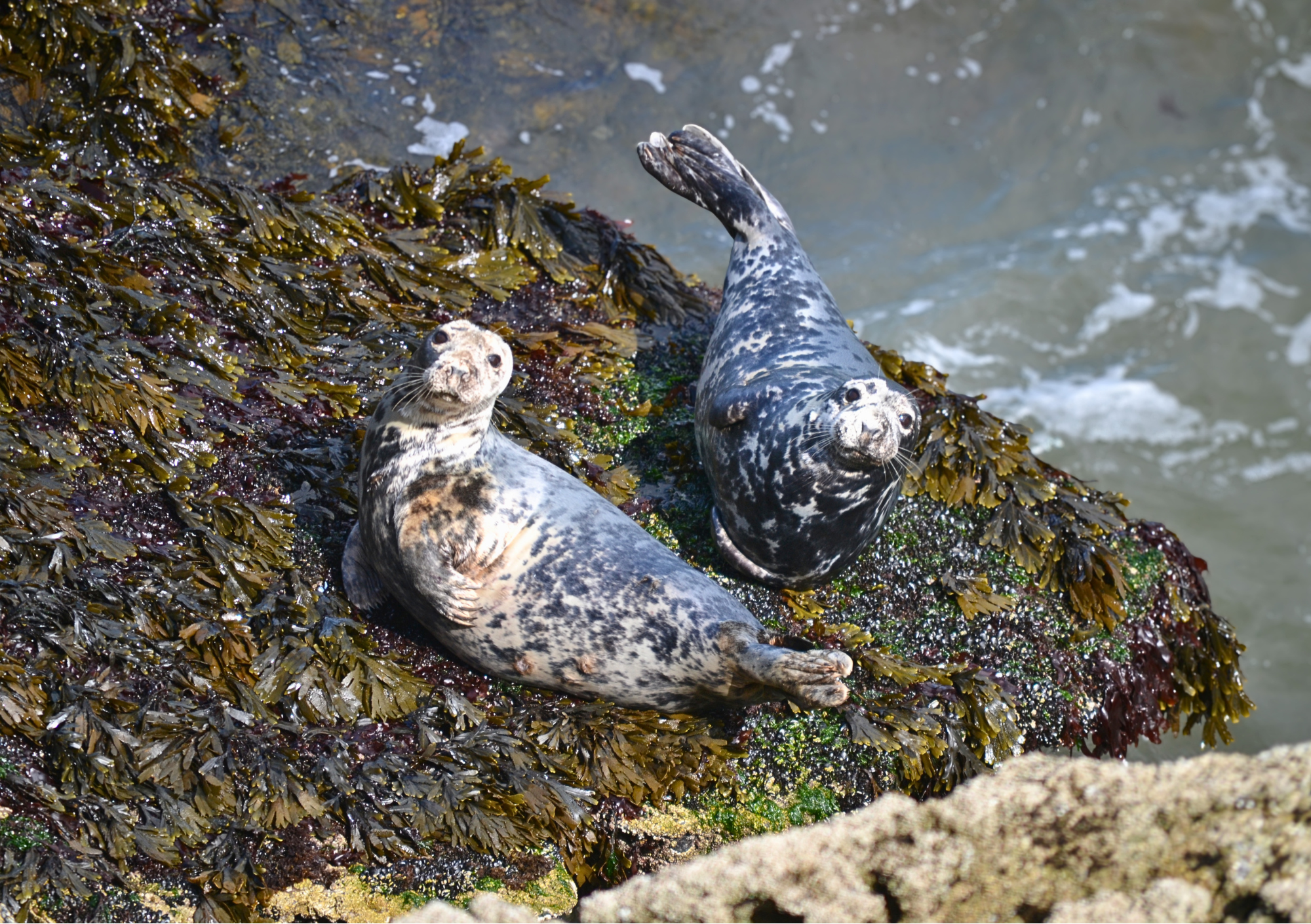
Already, both seals are reacting internally to a potential flight response. Their heart rates and cortisol levels increase and even though they do not escape to the safety of the sea, they remain in a high level of stress. Seals do not get used to people in close proximity, instead they remain in a state of chronic physiological strain.
Placing this into context, what if you were living in a constant world of potential threat of harm? How would this affect your health and relationships short and long term?
Any Health Care Professional would determine it to be highly detrimental.
This lower level of disturbance, although serious, is just the start of an escalating scale and severity of disturbance challenges seals face.
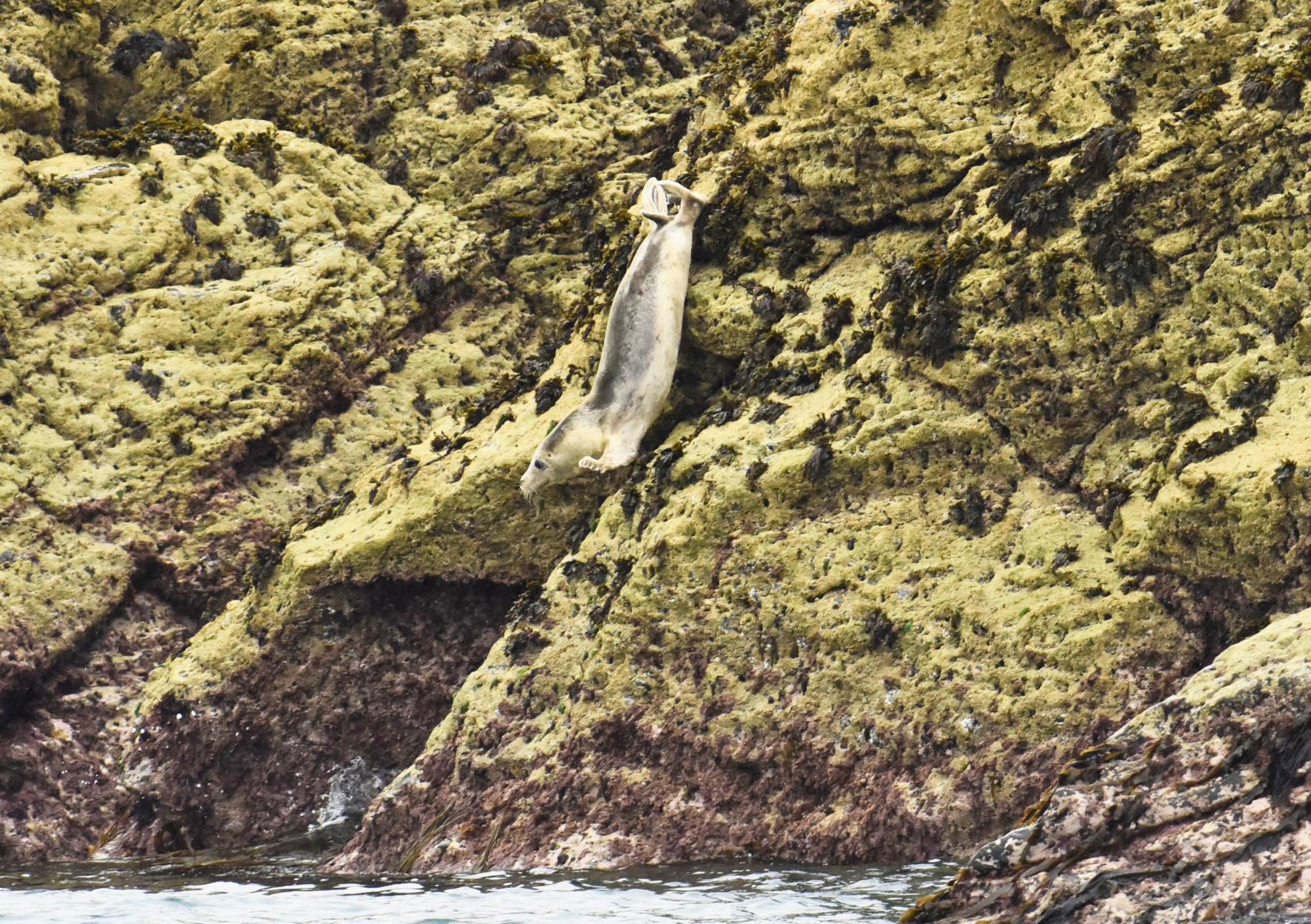
Seals stampeding at speed across rocky ground, tomb stoning from height, mums being separated from their pups are all an acute (immediate) trauma.
It is a panic flight response, the frequency of which increases during main holiday season where more people are present and in closer proximity. Research shows seals are disturbed 68% of the time when people are present.
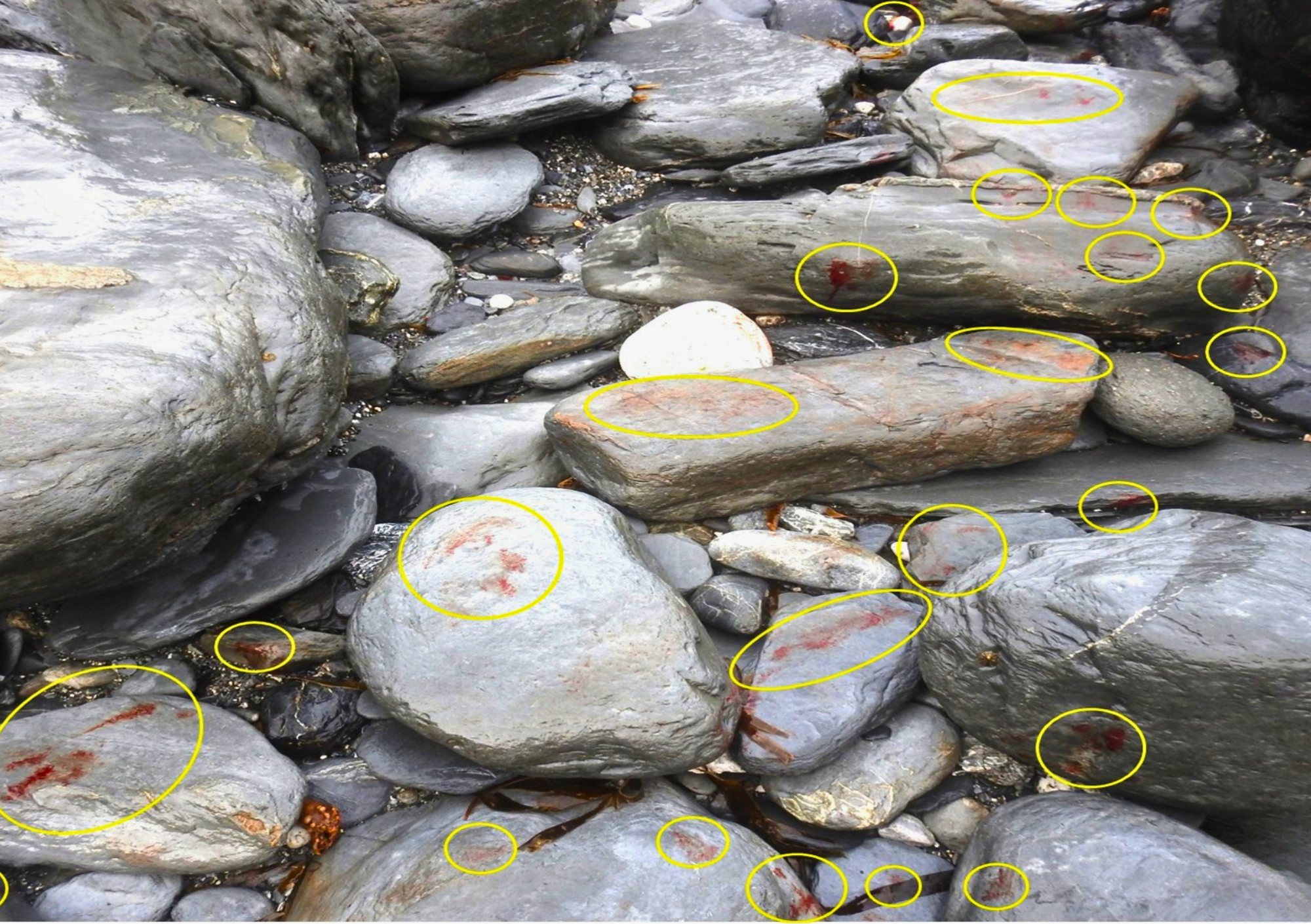
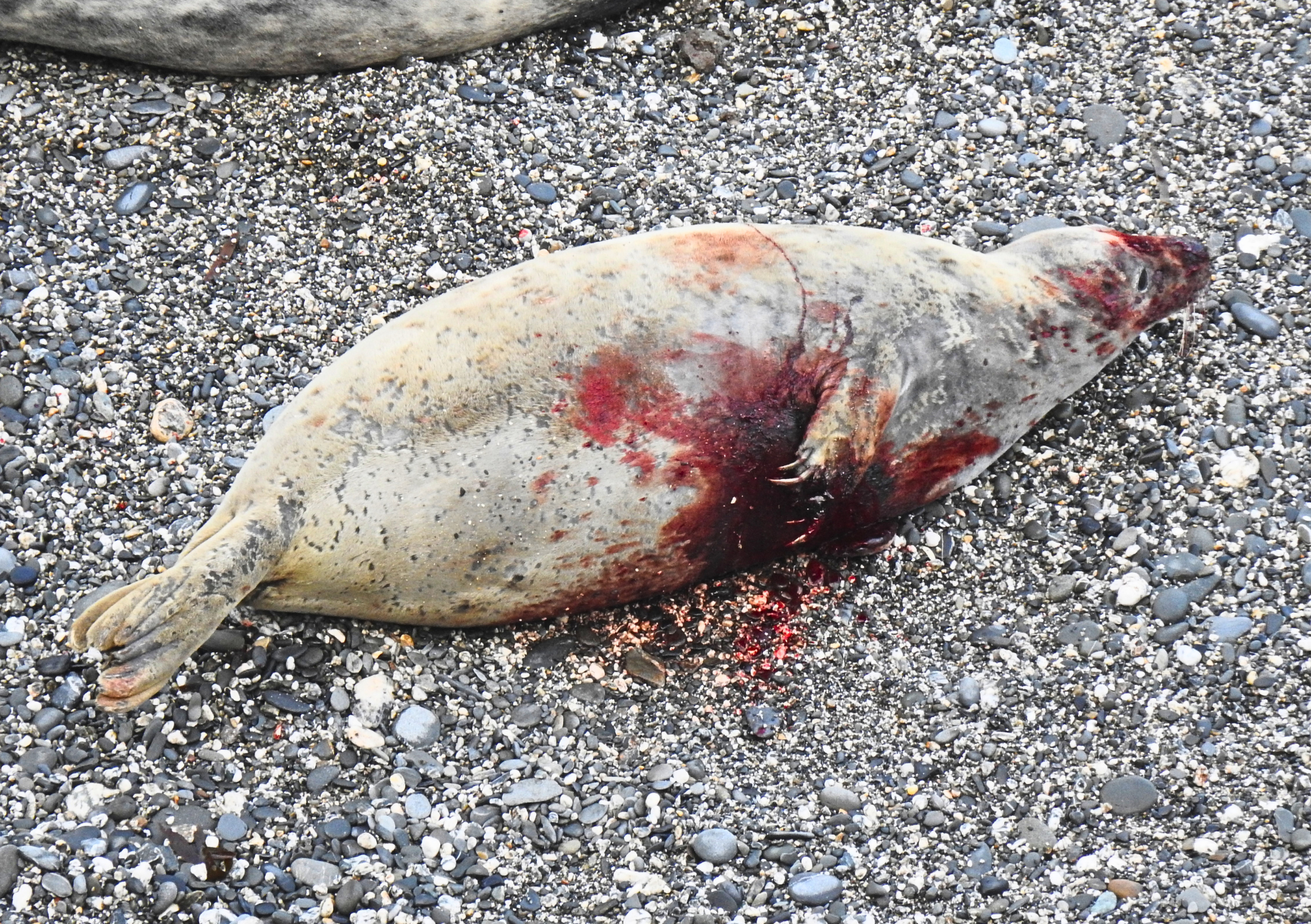
In most cases, seals’ ultimate response to approaching human activity is to flee into the sea as indicated by these images:
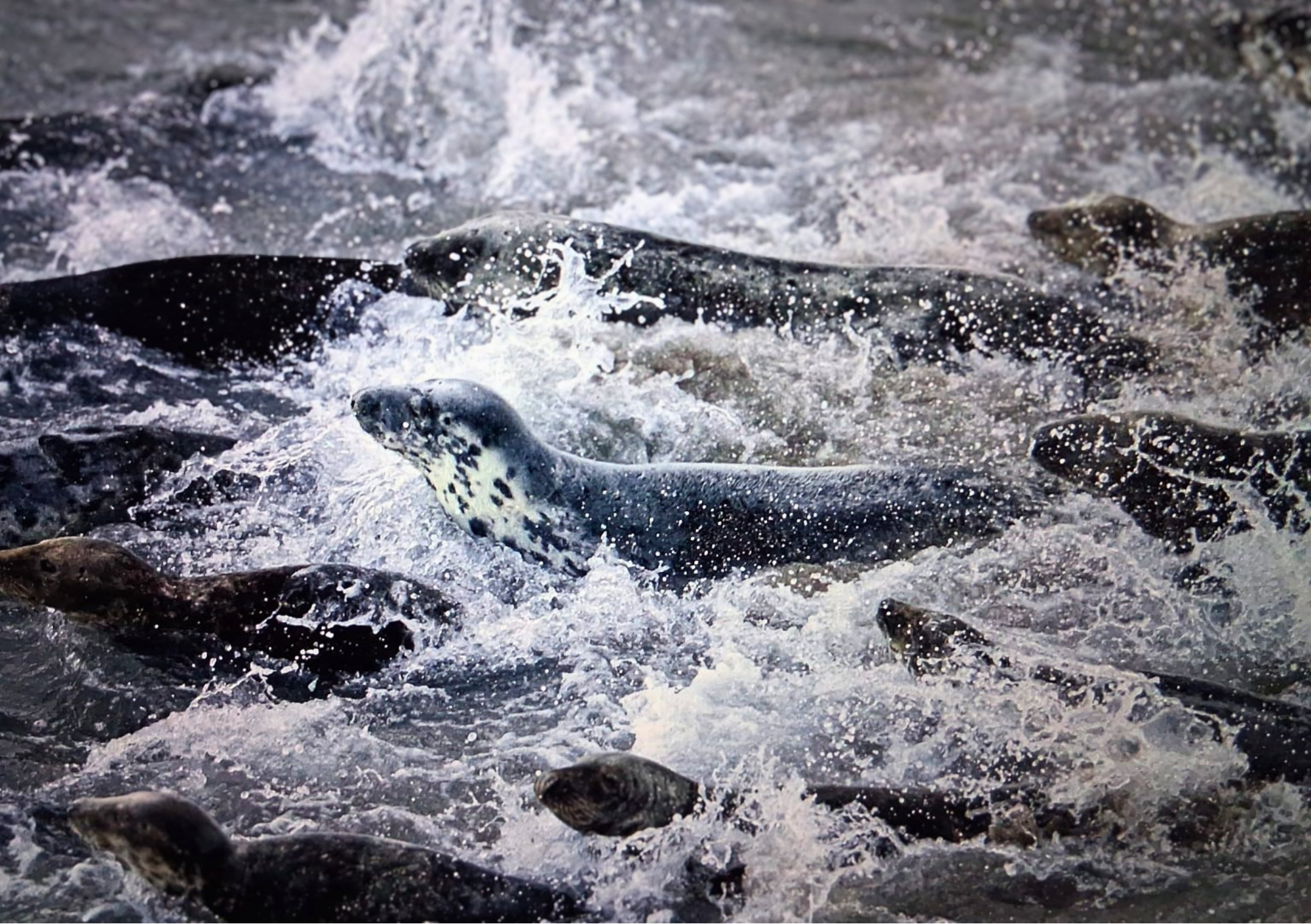
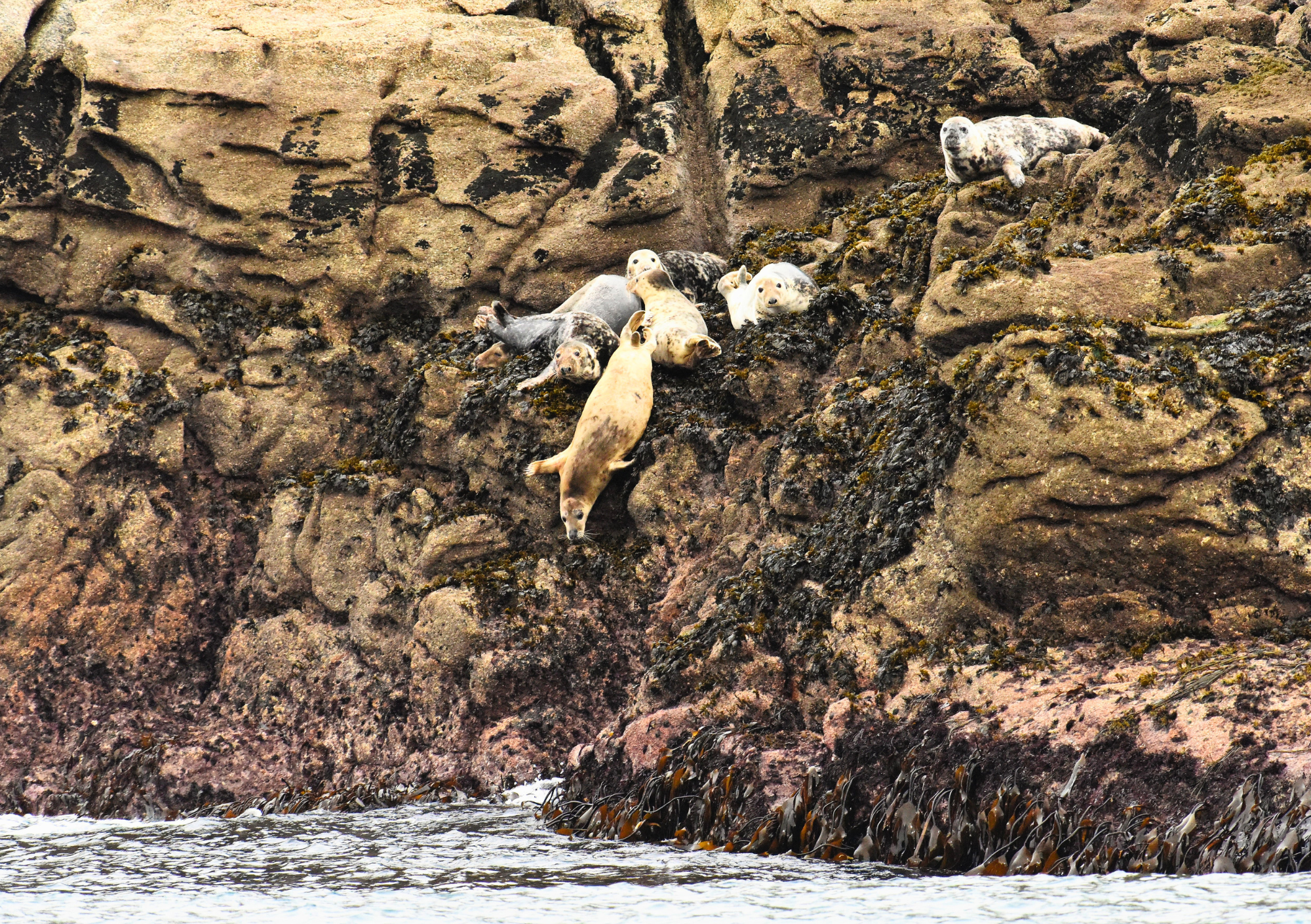
Blood trails from fleeing seals can often be seen on the surface where seals have fled from an imminent threat.
Flipper claws are often caught in rocky cracks and ripped out leading to profuse blood loss.
These images convey the reality and consequences of visible disturbance.
Visible and non-visible consequences
The consequences of disturbance are not pretty to view, with injuries such as broken claws, fractures and other wounds sometimes visible.
However, internally and not visible to the naked eye, are the silent killers of chronic disturbance.
For example, the activation of the hypothalamic pituitary-adrenal axis, which prepares the seal for fight or flight.
Disturbance triggers the release of cortisol (the primary stress hormone in seals). Chronic elevation of cortisol is linked to immunosuppression, muscle wasting, and impaired growth.
Immediate stressors cause a surge in adrenaline and noradrenaline, leading to instant heart rate jumps and rapid increases in blood glucose levels to provide immediate energy for escape movement.
High cortisol levels cause a decrease in circulating lymphocytes (white blood cells) and an increase in neutrophils (the immune system's primary, first-responder defence against infections, particularly bacteria).
This shift is a recognised biomarker for chronic stress in seals. A high ratio indicates a compromised adaptive immune system, making seals more susceptible to viral infections like Phocine Distemper Virus (PDV) amd Mouth Rot.
Stress hormones inhibit the production of pro-inflammatory cytokines (signalling proteins responsible for initiating and regulating an immune response).
These imbalances delay wound healing which can be a critical issue for seals injured during a disturbance event and seals suffering from entanglement or other injuries.
The previous paragraphs have included small, yet powerful examples of the science behind the physiological effects of disturbance to seals.
These would have been taken into account as part of the JNCC 7QQR recommendations to Government.
Public Awareness
The UK Seal Alliance represents a wide selection of conservation groups with specific interest in the protection of our native seals.
The Alliance was created as a working coalition of organisations and individuals, under the globally acclaimed Seal Protection Action Group dedicated to the protection of seals and their habitats worldwide.
Over the years, the Alliance has grown from strength to strength regularly advising and influencing on local and national policies.
Raising public awareness of emerging issues and challenges for seals has been at the very forefront of the Alliance’s work.
The Give Seals Space informational signage and leaflets have been distributed throughout the UK providing important information to protect seals with top tips to ‘Watch Seals Well’

These awareness campaigns will continue. However, seals still require legal protection from intentional or reckless disturbance, in line with many other species already afforded such protection.
What are we hoping to achieve?
Our overall aim is to:
Secure an amendment to Schedule 5 and Section 9 Wildlife and Countryside Act 1981 to include Atlantic Grey Seals and Harbour (Common) Seals together with the habitat they live within.
Our objectives are to:
Secure Government action by ongoing dialogue with Members of Parliament and Officials with the view of including the Atlantic Grey Seal and Harbour Seal as protected species under Schedule 5 Wildlife and Countryside Act 1981 and Section 9 (Protection of Habitat).
Galvanise all sectors of the community by raising public awareness of the Give Seals Space Petition to gain support for legislative change;
Continue to engage the public by raising awareness of disturbance via presentations, events, social media and mainstream media platforms.
Where do you fit in?
To achieve success will require a concerted effort across all sections of the community including organisations (both public and private) as well as the general public.
Gaining public support and traction is paramount as recently witnessed in the recent broadcasting of a television docudrama on the plight of the Post Office Sub-Postmasters.
Although this unfortunate situation was in the public domain for many years, it took a television programme to bring it to the fore winning over the hearts and minds of the public.
Public feeling is a powerful tool and can bring about change; we want to replicate that success.
Without you, we cannot protect our seals from the harm and suffering they are currently experiencing day in day out throughout the tourist season and beyond.
Campaign Launch
Over the last few months, the UK Seal Alliance Give Seals Space Strategy Group have worked tirelessly on what is required to achieve the aims and objectives.
On Monday 25th May 2026 (Spring Bank Holiday) the ‘Give Seals Space Campaign 2026’ will be launched.
Sue Sayer MBE (Chair UK Seal Alliance Executive) said “We are pleased to launch this campaign to raise awareness and bring about important changes that will ultimately protect our precious seals from harm” she continued “We totally supported the JNCC 7th QQR and it was disappointing that the Government rejected the recommendations that were based on many years of expertise. We hope the Government will now reflect and review their decision for seals and give our seals and their habitat the protection they deserve”
Supported by the UK Seal Alliance Executive, the campaign logo will be displayed on all resources.
The GiveSealsSpace campaign petition has been created and accessed via the following link https://c.org/sqtSyp28zD or by scanning this QR Code:

What does success look like?
We are realistic enough to realise that this may not be a short-term campaign…change can take time but we are confident that collectively with your voice, and the voices of everyone in your networks, we can raise sufficient awareness and support to amend the Wildlife and Countryside Act 1981.
Are you willing to help us achieve this, by signing then circulating the petition to all your networks? Also, are you willing to provide the media platform we need, to gain support for this important Campaign to reduce animal suffering?
We really appreciate everything that you can do for us.
Should you require further information then please contact Gareth Richards at gareth.richards6@virginmedia.comor Sue Sayer MBE at sue@sealresearchtrust.com
Thank you.