

Four tips for a seal-friendly holiday by the sea
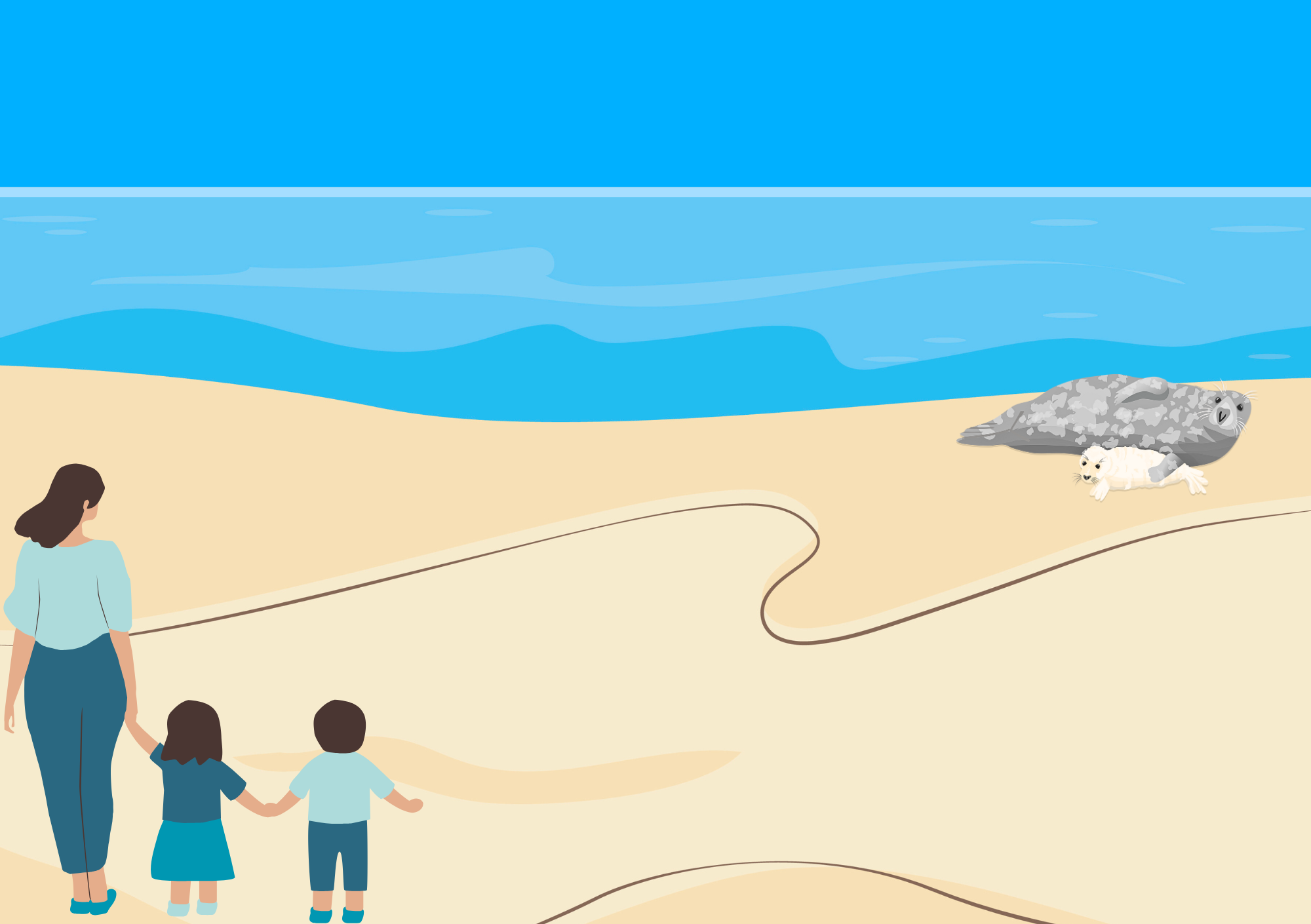
A family come across a seal mum and pup on the beach
A holiday by the sea offers a wonderful chance to relax and connect with nature. The sight of waves crashing on the shore, the feeling of sand between your toes (good weather permitting), and the possibility of spotting marine wildlife make coastal trips special for many of us.
Among the most charming residents of our coastlines are seals. Watching these playful and curious animals in their natural environment is a truly fantastic experience. They live in a challenging environment with an increasingly unpredictable ocean, so they need all the help we can give them.
To ensure these encounters are safe and enjoyable for both you and the seals, it’s important to be a responsible visitor. By following a few simple guidelines, you can help protect these special creatures and their habitats. Here are four tips for a coastal holiday that will ensure the experience is positive for both you and the seals, if you’re lucky enough to spot them.
1. Keep a respectful distance
Seals are wild animals, and humans getting too close can be stressful and even dangerous for them. They often come ashore to rest, digest food, or care for their pups. This is a vital part of their daily routine. Approaching them can cause them to panic and flee into the water, wasting precious energy they need for survival. This is especially harmful for pups, who can be abandoned by their mothers if disturbed.
As a rule of thumb, stay out of sight at least 100 meters (about 300 feet) away. If a seal starts to look at you, stretch, or move away, you are too close. Bring a pair of binoculars or use the zoom lens on your camera to get a great view without causing a disturbance. This way, you can observe their natural behaviors from a safe distance.
2. Pups on their own are usually fine
It’s common to find a seal pup alone on a beach, and your first instinct might be to help. However, in most cases, the pup is not in distress. Mother seals often leave their pups on the shore while they have a well earned rest in the nearby water. Research by the University of Glasgow actually found that mother seals transfer around one-third of their own bodyweight in food to their pups before they feed themselves, highlighting how rarely they’re left alone. Intervening can be more harmful than helpful, as a mother may not come back if she sees people near her pup.
If you find a pup, the best thing you can do is to stay out of sight and observe it from a significant distance. Do not touch the pup, pour water on it, or try to move it. If the pup appears injured, is in a dangerous location (like near a busy road), or you have been watching for several hours and the mother has not returned, then it’s time to call a professional. Contact a local marine wildlife rescue organization. They have the training and expertise to assess the situation and intervene if and when appropriate.
3. Never feed wild seals
Feeding wild animals, including seals, is a bad idea. It can make them dependent on humans for food, which dulls their natural hunting instincts. This can lead to them becoming aggressive or approaching people and boats for handouts, putting both themselves and humans at risk. Human food is also not suitable for their digestive systems and can make them sick.
Seals are skilled hunters with a diet tailored to their needs, consisting of fish, squid, and other marine life. Allowing them to find their own food is essential for their health and the balance of the local ecosystem. So, please keep your snacks to yourself and let the seals manage their own meals. Enjoy watching them hunt and play in the water, knowing you are helping them stay wild and healthy.
4. Keep your dog on a lead
If you’re traveling with your dog, it’s crucial to keep them under control when you're near seal habitats, as well as on the beach in general. Even the friendliest canine can cause a seal to panic. A dog's presence can be perceived as a threat, causing resting seals to stampede into the sea. This can lead to injury, especially for young or pregnant seals.
Furthermore, there is a risk of disease transmission between dogs and seals. To keep everyone safe, always keep your dog on a lead and well away from any seals. Be mindful of areas known as haul-out sites, where seals gather in groups. If you see seals on the beach, it's best to choose a different route for your walk. Your consideration ensures a safe and stress-free environment for both the seals and your beloved pet.
Help protect these wonderful animals
By taking these simple yet impactful steps, you can help protect seals and preserve the natural wildness of our coastlines for generations to come. A respectful approach ensures that your holiday is not only more memorable, wonderful wildlife encounters, but also contributes to the well-being of the amazing wildlife that call the sea home.
Care, don’t share online. As seals are extra vulnerable on land, it is best not to share the names of their sensitive seal sites online. Instead use generic location names to avoid adding to disturbance levels. Remember you cannot take a good photo of a seal on your phone and it is best to avoid sharing any photo of a seal looking at the camera, as it has likely been disturbed.
If you’re looking for more tips for your coastal holiday, then this guide from Original Travel offers some great general advice for being sustainable by the sea. Enjoy your time by the shore, knowing you’re making a positive difference – one thoughtful choice at a time.